In what ways does your media product use, develop or challenge forms and conventions of real media products? & Looking back at your preliminary task, what do you feel you have learnt in the progression from it to the full product?
How does your media product represent particular social groups?
Representation Prezi
What kind of media institution might distribute your media product and why?
Distribution Xtranormal
Who would be the audience for your media product? & How did you attract/address your audience?
Audience Prezi
What have you learnt about the technologies from the process of constructing this product?
Technologies Xtranormal
Tuesday, 10 May 2011

Tuesday, 3 May 2011
INDIVIDUAL EVALUATION

 In terms of how we used the forms and conventions of Noir in our opening, I think we developed them slightly especially in our character choices. As I previously stated, there was a femme fatale and beat-down hero. We also had the edition of a lesbian character, which was not present in any of the early Noirs. There has been a lesbian Neo Noir created in 1996. It was called Bound and followed the story of Corky and her lover Violet who planned to steal millions from Violet’s mobster boyfriend. This highlights the contemporary feel of our opening. The lesbian character is the henchman in the film, which was another stock character often present. Our film opening also had a lot of the Noir stylistics due to the lighting and cold feel, in the abandoned house scenes, which was caused by us not correcting the white balance. We were trying to make the whole image look darker whilst on set, and this ended up giving it a bluish hue, which worked really well. The narrative brought about unsurity according to our audience when the opening was screened and the opening shots
  of the diamond created an enigma of what it had to do with the narrative. This unsurity is something common in Noir films as they like to make the viewer uncomfortable and keep them on the edge of their seat. I feel our opening had elements of this and we included quite a lot of the conventions found in many Noirs, both old and new.
How does your media product represent particular social groups?
There is quite a large representation in our opening, we have both men and women and also represent both sexualities. It was not originally scripted that the femme fatale’s henchman/lover would be a woman, but on the day of filming we were a man short and could only get hold of a woman to step in for us. We dressed her in a very ambiguous way, all in black with huge boots and her hood up whilst smoking. This created a very butch look, 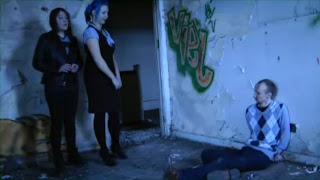 which contrasted with the femme fatale’s sexy feminine style. The femme fatale also has bright blue hair, and whilst many people dye their hair not many go for such a striking colour. She represents the alternative section of the public that like to make a statement, and I think this really matched with her character in the film. The only man in the opening is Al, the fall guy, who is represented as quite weak and has clearly been played by the femme fatale. This could mean that the film is less appealing to men, but it would be impossible for the story to work if both the characters were equally as strong. In modern cinema the lead character is often a male and is usually portrayed as more significant that the women in the film. It might make a nice break for cinema goers to see a male character from a completely different prospective, especially female cinema goers as they probably feel a little misrepresented by certain blockbuster films.
 which contrasted with the femme fatale’s sexy feminine style. The femme fatale also has bright blue hair, and whilst many people dye their hair not many go for such a striking colour. She represents the alternative section of the public that like to make a statement, and I think this really matched with her character in the film. The only man in the opening is Al, the fall guy, who is represented as quite weak and has clearly been played by the femme fatale. This could mean that the film is less appealing to men, but it would be impossible for the story to work if both the characters were equally as strong. In modern cinema the lead character is often a male and is usually portrayed as more significant that the women in the film. It might make a nice break for cinema goers to see a male character from a completely different prospective, especially female cinema goers as they probably feel a little misrepresented by certain blockbuster films.
What kind of media institution might distribute your media product and why?

Who would be the audience for your media product?

There is more to an audience that just their age however, there is also the issue of socio economics meaning what class our audience comes from. Class is not hugely represented in our opening, but none of our actors were upper class so it is likely that our audience would be working class and middle class. In terms of gender, I previously stated that both women and female were represented but in some ways they were both represented badly. One female character is represented as cruel and deceitful whilst the male character seems weak. This means the gender representation is quite equal, however due to the lesbian storyline I think females would be more interested in the film. They might also like to see a woman empowered over men. Also, due to the lesbian story line our typical audience member might be a lesbian, or gay, or just in support of gay rights. This is not a film aimed at closed-minded people, and I think that comes across in our narrative. I think that our typical audience member doesn’t necessarily have to be a huge Film Noir fan, this could be the film that introduces them to genre as it has contemporary elements that might appeal. I would hope our audience would be an active audience that would interact with the product and ask questions about things, instead of just passively accepting anything that came out of the screen at them. I think it would be a shame if our product was just fully accepted and then forgotten about, and in some cases opposition often makes it a more appealing product to those who have yet to form an opinion as it means they want to go and see it.
We screened our film opening to our media class in order to get an idea of what our audience thought of it. They were all the target age and were prepared to be active audience members as we asked them for constructive criticism at the end of the screening. Overall, they thought it had a clear narrative and the opening created an enigma, although there could have been more emphasis on the diamond as it was the main factor in the story. They thought felt like an interpretation of a Noir and the stylistics worked well. We asked them who they thought it was aimed at and they said 15+ which is exactly what we were going for. Our feedback was quite positive, although there were problems pointed out, so on the whole I feel we identified our audience and their needs well.
How did you attract/address your audience?
In order to attract our audience we tried to pick characters and actors that were somewhat like them in order for them to be able to relate. Our actors were 18, 19 and 20 years old so were right in the centre of our age range. We used a wide representation meaning lots of different people could be attracted to the film. We also used stock characters from the Noir genre, so anyone who was already familiar with Film Noir could relate to them. We included a femme fatale, downbeat hero and henchman who were all involved in a criminal offence in some way. Our narrative was well thought out and we tried to make it quite exciting in order to keep the viewer entertained. It revolved around the theft of a diamond. Al, the main character and our out of luck hero stole the diamond. The femme fatale, Eve, convinced him to steal it for her, as she wanted it for her own gain. Little does Al know that whilst she is confessing her love to him and promising they’ll remain together forever, she is actually in a relationship with her long-term female lover and has no real interest in Al beyond his ability to get the diamond. This storyline is quite a typical Noir story, as we planned it to be.

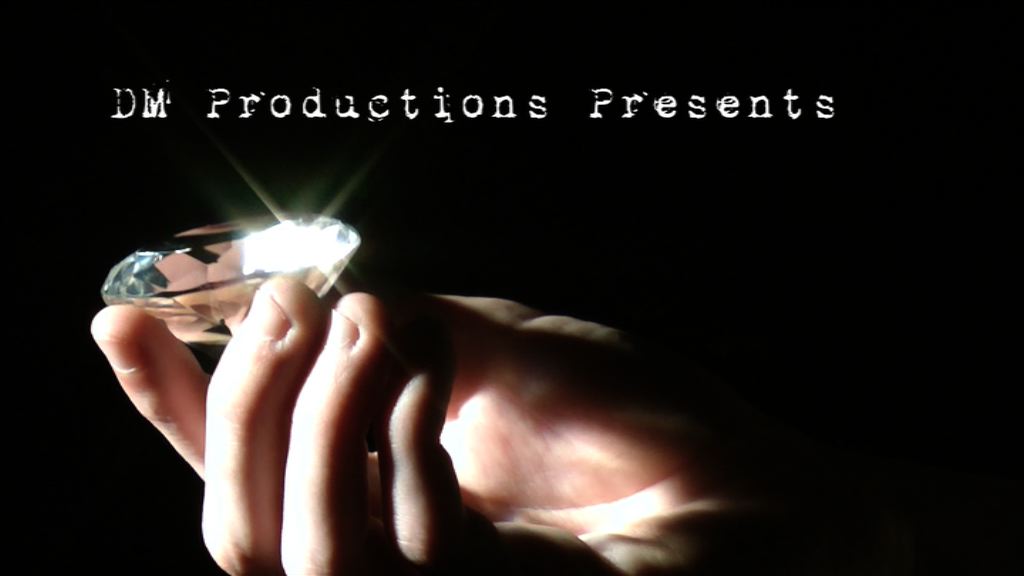 reached out to the audience and in the screening it was something that was mentioned a few times. We had no initial plan in our synopsis for our titles and we assumed we would just add some text to the images in the edit. However, after a brainstorm we thought we needed a way to get the diamond more involved in the opening as it was only seen once. We went into the studio and used one light to film a group member moving the diamond around in the light. This worked really well when we put it all together and I’m really glad we went for this instead of just some plain text and a voiceover. Our audience really liked this too and thought it had a very Noir feel to it. I think our opening was very aesthetically pleasing what with the diamond titles and the colour changes due to white balance and this was the reaction we got from our screening audience.
What have you learnt about the technologies from the process of constructing this product?

 background music for much of the opening. If it wasn’t for Soundbooth we would have not been able to use our first choice for music. For us this technology was vital for out film opening to work as we wanted. We also used the program Motion to create the logos for our production and distribution companies. We edited one of the logos in Photoshop also, in order to get it the colour we wanted so that it matched the text available in Motion. Although we didn’t use these programs as much as they others, they were very important as without the logos our opening would look unfinished and unprofessional.
Looking back at your preliminary task, what do you feel you have learnt in the progression from it to the full product?

 the shot lists in accordance with the storyboard. We got all our pre-production work done meaning we had more than enough time to go and film. We also had to sort out locations before being able to film which meant asking permission to use the college restaurant and finding our what props we could borrow from their and what we had to bring from home. I spoke to one of the teachers who work in the restaurant and she gave us a specific time and instructions on how to get in. This meant our time management had to be spot on in order to film there and then go on to our other location where we had to meet another actor. On the day we managed to get everything filmed in the time slots we had originally planned for and I think we worked really well as a team and individually.
In terms of what I learnt during the progression from the first exercise to the final product I think the majority of it was to do with the technology we were using. In our final product we used a memory card with the camera instead of a tape so had to learn how to use a completely different camera. We put it on manual so had to learn how to focus it on the subject and how to make sure everything was exposed correctly. We then had to find out how to import from the memory card into the iMac using a card reader. I think it was quite useful as I now have the choice to use either tape or card since I know how to work with both. I learnt a lot more about Final Cut Pro during the process and now feel very at home using it. I learnt a lot about sound and how to make it sound better with things like Soundbooth and Logic Pro, but also using things like cross fades in order to make the sound clips smoother. I realised that I enjoyed editing the piece much more that filming it and in future projects will know where my greatest strengths lie. During this piece I also thought a lot more about how each stylistic effects the final product and purposely did things because the group knew it would look good in the end. In the preliminary exercise I was more preoccupied in getting all the shots in to really think about location, costume and props. I feel much more confident in my media knowledge and I think this showed in the final piece. Our screening audience said it had quite professional looking production values and overall was high end pretty successful. I am really proud of what we created and was really pleased with the feedback.
Tuesday, 26 April 2011
POST PRODUCTION SCHEDULE
Now that we had all our footage all that was left to do was edit it together. The following is a brief description of what we did in the lessons following the shoot.
Post Film Lesson One
We began by looking over our footage and importing it into Final Cut Pro. We started to roughly edit the clips in order to create a basic time line of what we wanted it to look like. There were a few gaps left where we wanted titles or sound effects to go but apart from that we got a good chunk done this lesson. We were surprised how quickly it all came together, although of course it needed finer editing.
Post Film Lesson Two
We finished the basic edit in this lesson and began looking for music to add. We spent a long time on royalty free websites picking some downbeat jazz and an accurate siren sound effect. However, we found when we imported these into Final Cut Pro it rejected them and would not play them on our time line. We found out that we had to convert them to an .aiff file type instead of an .mp3. We used Adobe Soundbooth to do this. Once our music and sound effect was in place we listened to the completed audio and realised at some points it was hard to hear what the characters were saying. We thought recording their parts and dubbing them over would be easier that re-shooting the entire opening so went and recorded that at the end of the lesson. We used Logic Pro to edit the sound and imported it into Final Cut Pro. We began placing the sound in the time line.
Post Film Lesson Three
We perfected the dubbing in this lesson and whilst listening to the audio we realised some of the voice over we had recorded was a little quiet. We re-recorded this in the same way as we recorded the other voice over/dubbing and imported it into the time line. We tweaked the audio and added cross fades in order to get a smoother sound from clip to clip. We began adding titles and came up with the idea of filming the diamond glittering in the light and the titles on their own looked a little boring. We based this idea on the opening of the children's tv show The Queen's Nose. This can be seen below:
Post Film Lesson Four
We edited the diamond in the light sequence at the start of this lesson and refined the titles to be sure they looked exactly as we wanted them too. After going over the edit a few times to be sure we hadn't missed anything we exported the final opening as a Quick Time movie. We then screened it to the rest of the class and received feed back.
Post Film Lesson Five
This was our last lesson where we just tweaked a few things people had brought up at the screening. We created our company logos using Motion and Photoshop and added them to the start of the opening and took a few more screen caps to put on our blogs. For the second half of the lesson we talked as a group about how we would go about creating our group evaluation. We split the seven evaluation questions into groups and decided how would be best to explain them. We decided on creating two Prezis, two Xtranormal pieces and a video/audio to go with our opening in the style of a DVD extra. We split these amongst us all so that each group member would take charge of writing up the groups' answer to a certain evaluation question or questions. We arranged a way of communicating in case any one ran into trouble. We decided to film the video piece next week and edit it in time for the coursework deadline.
Post Film Lesson One
We began by looking over our footage and importing it into Final Cut Pro. We started to roughly edit the clips in order to create a basic time line of what we wanted it to look like. There were a few gaps left where we wanted titles or sound effects to go but apart from that we got a good chunk done this lesson. We were surprised how quickly it all came together, although of course it needed finer editing.
Post Film Lesson Two
We finished the basic edit in this lesson and began looking for music to add. We spent a long time on royalty free websites picking some downbeat jazz and an accurate siren sound effect. However, we found when we imported these into Final Cut Pro it rejected them and would not play them on our time line. We found out that we had to convert them to an .aiff file type instead of an .mp3. We used Adobe Soundbooth to do this. Once our music and sound effect was in place we listened to the completed audio and realised at some points it was hard to hear what the characters were saying. We thought recording their parts and dubbing them over would be easier that re-shooting the entire opening so went and recorded that at the end of the lesson. We used Logic Pro to edit the sound and imported it into Final Cut Pro. We began placing the sound in the time line.
Post Film Lesson Three
We perfected the dubbing in this lesson and whilst listening to the audio we realised some of the voice over we had recorded was a little quiet. We re-recorded this in the same way as we recorded the other voice over/dubbing and imported it into the time line. We tweaked the audio and added cross fades in order to get a smoother sound from clip to clip. We began adding titles and came up with the idea of filming the diamond glittering in the light and the titles on their own looked a little boring. We based this idea on the opening of the children's tv show The Queen's Nose. This can be seen below:
Post Film Lesson Four
We edited the diamond in the light sequence at the start of this lesson and refined the titles to be sure they looked exactly as we wanted them too. After going over the edit a few times to be sure we hadn't missed anything we exported the final opening as a Quick Time movie. We then screened it to the rest of the class and received feed back.
Post Film Lesson Five
This was our last lesson where we just tweaked a few things people had brought up at the screening. We created our company logos using Motion and Photoshop and added them to the start of the opening and took a few more screen caps to put on our blogs. For the second half of the lesson we talked as a group about how we would go about creating our group evaluation. We split the seven evaluation questions into groups and decided how would be best to explain them. We decided on creating two Prezis, two Xtranormal pieces and a video/audio to go with our opening in the style of a DVD extra. We split these amongst us all so that each group member would take charge of writing up the groups' answer to a certain evaluation question or questions. We arranged a way of communicating in case any one ran into trouble. We decided to film the video piece next week and edit it in time for the coursework deadline.
PRODUCTION SCHEDULE
Although the pre-production work took a few lessons to sort, the actually production of our opening only took us one session to film. Below is a brief run through of what we did.
Filming Lesson
We began by checking over out pre-production work briefly to be sure everything we needed was there. Then we went to our first location, which was the college restaurant, in order to film one of our scenes. We had agreed to meet at a certain place and time with a teacher in order to get into the restaurant but when we arrived we couldn't find her. We spent a good twenty minutes talking to other teachers around the area before being able to get into the restaurant to set up our equipment. This was a bit annoying as we knew we had to go to another location and film there too so were a bit worried we'd run out of time. However, the shooting of the restaurant/bar scene went really well and we were allowed to use props from the bar which made the scene even more convincing. We had a few issues when we were packing up as it took us a while to dismantle the light, but apart from that everything went fine.
We returned the light and then moved on to our second location which was a grubby looking house by the docks. We had agreed to meet our other actress there so whilst we were waiting for her we planned what room we'd use. We decided the downstairs was too dark so went upstairs. Part of the house is facing a main road meaning that that end had a lot of background noise of traffic so we tried to get as far away from it as possible. Once our actress arrived we began to film, this was where I had to work quite hard as every one else in my group had to be in the scene acting. This meant I had to hold the microphone whilst also making sure the camera was in the right position and filming. The day we chose to film on was quite a cold one and the windows in the house were wide open or non-existant meaning the location itself was really cold. After an hour or so of filming both myself and the actors were finding it difficult to keep going as our hands were freezing up. We reviewed the footage we had and realised we'd made a continuity error so had to re-shoot a scene. Following this we packed up and headed back to the college to return the equipment confident that we had got everything we needed.
Filming Lesson
We began by checking over out pre-production work briefly to be sure everything we needed was there. Then we went to our first location, which was the college restaurant, in order to film one of our scenes. We had agreed to meet at a certain place and time with a teacher in order to get into the restaurant but when we arrived we couldn't find her. We spent a good twenty minutes talking to other teachers around the area before being able to get into the restaurant to set up our equipment. This was a bit annoying as we knew we had to go to another location and film there too so were a bit worried we'd run out of time. However, the shooting of the restaurant/bar scene went really well and we were allowed to use props from the bar which made the scene even more convincing. We had a few issues when we were packing up as it took us a while to dismantle the light, but apart from that everything went fine.
We returned the light and then moved on to our second location which was a grubby looking house by the docks. We had agreed to meet our other actress there so whilst we were waiting for her we planned what room we'd use. We decided the downstairs was too dark so went upstairs. Part of the house is facing a main road meaning that that end had a lot of background noise of traffic so we tried to get as far away from it as possible. Once our actress arrived we began to film, this was where I had to work quite hard as every one else in my group had to be in the scene acting. This meant I had to hold the microphone whilst also making sure the camera was in the right position and filming. The day we chose to film on was quite a cold one and the windows in the house were wide open or non-existant meaning the location itself was really cold. After an hour or so of filming both myself and the actors were finding it difficult to keep going as our hands were freezing up. We reviewed the footage we had and realised we'd made a continuity error so had to re-shoot a scene. Following this we packed up and headed back to the college to return the equipment confident that we had got everything we needed.
PRE PRODUCTION SCHEDULE
Below is a brief run through of the things we did in lessons before filming. In order to be sure we were ready to film and knew exactly what we were doing we had to produce some pre-production work. We had to of course come up with a story, write a group synopsis and treatment, draft a script and story board, and run through location checks in order to make sure we didn't run into any danger whilst out filming.
Lesson One
We began by talking through our individual ideas, and the fact that one of our team members had dropped Media. We had to find a way to work without her as we needed three actors in one scene as someone to film and hold the microphone. We figured we would manage to work it out and after hearing Di's idea we quite liked the sound of it. We decided to keep our notes together and talk more about it the next lesson.
Lesson Two
We refined our idea, which was a combination of Di's original idea and ideas we had come up with in the previous lesson. We began thinking about location and props, and created a small proposal for our opening which we then had to read out to the class. The idea was still quite rough so it took a while to really get it across to people what we wanted to do with it as we were still so unsure ourselves. The feedback we got was really helpful and we realised we were drifted out of the Noir genre and more into a psychological horror of some sort. We decided to reign it all in and it was only then that we came up with an idea we were really happy with.
Lesson Three
This lesson we really moved on to our pre-production work. We decided who would take up each role within the group and distributed duties to each person. We filled in location and health and safety sheets because we knew exactly where we wanted to film, but we realised we needed an extra location to film the restaurant scene. I decided to ask the college if we could use their restaurant and they agreed, giving us a set time to come and film and instructions on how to get in. We began making loose notes for our treatment and wrote a rough synopsis. We all had set pieces to finish at home in order to be ready to film in time.
Lesson Four
This was our final week of writing the post production. We put together everything we had done in class and at home and checked them over to be sure we were ready to go shoot. We made final adjustments to the treatment and brainstormed about who we could get to help us with the acting. In the end we managed to get out friend who had dropped out to come in and do a bit of acting for us. We began filming in the next lesson, and successfully got all our shots during the three hours allocated for that.
Lesson One
We began by talking through our individual ideas, and the fact that one of our team members had dropped Media. We had to find a way to work without her as we needed three actors in one scene as someone to film and hold the microphone. We figured we would manage to work it out and after hearing Di's idea we quite liked the sound of it. We decided to keep our notes together and talk more about it the next lesson.
Lesson Two
We refined our idea, which was a combination of Di's original idea and ideas we had come up with in the previous lesson. We began thinking about location and props, and created a small proposal for our opening which we then had to read out to the class. The idea was still quite rough so it took a while to really get it across to people what we wanted to do with it as we were still so unsure ourselves. The feedback we got was really helpful and we realised we were drifted out of the Noir genre and more into a psychological horror of some sort. We decided to reign it all in and it was only then that we came up with an idea we were really happy with.
Lesson Three
This lesson we really moved on to our pre-production work. We decided who would take up each role within the group and distributed duties to each person. We filled in location and health and safety sheets because we knew exactly where we wanted to film, but we realised we needed an extra location to film the restaurant scene. I decided to ask the college if we could use their restaurant and they agreed, giving us a set time to come and film and instructions on how to get in. We began making loose notes for our treatment and wrote a rough synopsis. We all had set pieces to finish at home in order to be ready to film in time.
Lesson Four
This was our final week of writing the post production. We put together everything we had done in class and at home and checked them over to be sure we were ready to go shoot. We made final adjustments to the treatment and brainstormed about who we could get to help us with the acting. In the end we managed to get out friend who had dropped out to come in and do a bit of acting for us. We began filming in the next lesson, and successfully got all our shots during the three hours allocated for that.
Tuesday, 29 March 2011
AUDIENCE THEORY
In order to find out more about our audience and what they wanted from a film we created a questionnaire and asked some fellow college students to fill them out. We got a very good response and received some useful information.
 We began by asking what genre of film each person had most recently watched and bar far this was Comedy. Only two people had most recently watched a Crime Thriller or Noir. We asked how many people actually knew of the genre Film Noir/Neo-Noir and everyone answered yes. However, there was a slight bias because we asked students that were studying in the area we were so they would have most likely all been Media students. Looking back we should have gone for a wider choice of people in order to get a real idea of how many people know about Noir. We also asked people for the most memorable scene they remember from a film. This was quite an important question as it gave us insight into the sort of things that impact on people and they remember for being well done. The answers ranged from films watched during child hood, such as the start of The Lion King, to recent films with impressive special effects, such as in the film Inception when the dimensions collapse into themselves. We learnt from this that there is no simple recipe for what people enjoy seeing, and what they take from a film. Not every film fits every person, which is why we have to decide who our ideal audience is.
 Our ideal viewer would be someone into thriller/noir films who would actively decide to go see the film at the cinema. Alternatively, there would be regular cinema-goers who would watch the film if they had to pick one once arriving at the cinema. Our ideal viewer would be either gender, although a male may be more interested in the action side of the film and be less squeamish towards the violence included in the story. Our film would be rated a 15 and our ideal age range would be around 15-25, although this does not exclude other ages from seeing it as they too might enjoy it.
After researching into our audience and reading the answers from our questionnaires we feel we know a lot more about our target audience and how to approach them. Knowing this means we can shape our film opening to their needs and desires in order to make it a success.
 Our ideal viewer would be someone into thriller/noir films who would actively decide to go see the film at the cinema. Alternatively, there would be regular cinema-goers who would watch the film if they had to pick one once arriving at the cinema. Our ideal viewer would be either gender, although a male may be more interested in the action side of the film and be less squeamish towards the violence included in the story. Our film would be rated a 15 and our ideal age range would be around 15-25, although this does not exclude other ages from seeing it as they too might enjoy it.
 After researching into our audience and reading the answers from our questionnaires we feel we know a lot more about our target audience and how to approach them. Knowing this means we can shape our film opening to their needs and desires in order to make it a success.
Friday, 18 March 2011
PRE PRODUCTION ROLES
In order to successfully create our group opening we had to work together. There was lot of pre-production work that had to be done and the best way of doing this in a productive amount of time would be for each of us to take on a specific role and do the paperwork related to that role. The four roles were:
We had thirteen pre-production tasks to complete including allocating roles. This meant we each had three or four tasks to do on our own, as some tasks needed to be done as a group. These included the group target audience report and the treatment. For the treatment each of us wrote detailed notes on the section that related to our role and then we put them all together. As the Producer, I had to write the synopsis, script, decide on the production schedule and keep hold of all the pre-production work we had completed so that we knew it was safe. Courtney did the target audience questionnaire, the call sheets and along with myself and Di picked the music. We spent a long time on this as a group, although originally it was going to be just one persons job. This is because we found it very hard to find the sound we wanted that was both free and without copyright. Di drew the storyboard and filled in all the information on locations, props and costumes. I feel we all completed our tasks very well and this helped us as we had more time to think about filming instead of worrying that someone hadn't done their bit.
- Director
- Producer
- Editor
- Art Director
We had thirteen pre-production tasks to complete including allocating roles. This meant we each had three or four tasks to do on our own, as some tasks needed to be done as a group. These included the group target audience report and the treatment. For the treatment each of us wrote detailed notes on the section that related to our role and then we put them all together. As the Producer, I had to write the synopsis, script, decide on the production schedule and keep hold of all the pre-production work we had completed so that we knew it was safe. Courtney did the target audience questionnaire, the call sheets and along with myself and Di picked the music. We spent a long time on this as a group, although originally it was going to be just one persons job. This is because we found it very hard to find the sound we wanted that was both free and without copyright. Di drew the storyboard and filled in all the information on locations, props and costumes. I feel we all completed our tasks very well and this helped us as we had more time to think about filming instead of worrying that someone hadn't done their bit.
STORYBOARD
This is the basic storyboard for our production. It was more of a rough guide in the end and we took some more, or some different shots than we'd scripted. It was really helpful to have it there though because we knew what we were aiming for in the long run meaning we stayed right on track whilst shooting. The storyboard was drawn by Dianne as she is the Art Director.


Monday, 7 March 2011
SCRIPT FOR OUR FILM NOIR
Below are screen caps of our script for the opening scene. It was created by me using a program called Celtx, as this provides a handy and easy to use template for script writers. This was just a rough guide for our actors and on the day we found it worked better if Eve said less during the final scene. However, the rest of the scenes remained pretty much the same.


GROUP TREATMENT


SYNOPSIS FOR OUR GROUP FILM NOIR
Our aim is to create the introduction to a neo-noir film, which will be around two minutes long. We will do this in a group of three, made up of myself, Dianne Hamilton and Courtney Smith. I will be working as the producer, Dianne will be the art director and Courtney the director. Dianne and Courtney will also feature in the film as actors, as well as another male who is yet to be decided.
 Our film is based around a diamond. The female lead in our film, Eve, played by Dianne, desperately wants this diamond so concocts a clever plan to get it. She is the typical femme fatale, and uses men to get exactly what she wants. She happens upon the slightly downtrodden male lead, Al, played by Courtney. She begins a relationship with him, leading him to believe she loves him. Once he is under her spell, she persuades him to steal the diamond. However, although Al is in love with this woman, he suspects something of her. After a while he realises what he has done is wrong and tries to take the diamond back. He tells Eve this, meaning to save herself she must take drastic action as her fingerprints are all over the diamond as well as Al’s. She enlists the help of her lover, Seth, who she has been secretly seeing the whole time she has been with Al. She arranges to meet Al in a restaurant, where she tries to persuade him to keep the diamond. Again, he refuses, so she drugs him. With the help of Seth, she abducts Al and takes him to an abandoned house. She ties him up and taunts him, leading him to discover she never loved him and was with someone else the whole time. Unbeknown to the audience, Eve has called the police on him, and she reveals this when we hear sirens in the distance. She has given them information that links him to the crime, enough for them to be able to arrest and charge him. She then leaves Al tied up waiting to be found by the police, running away with the diamond, and Seth in tow.
However, as I have previously mentioned, we will be making only the introduction to the film. As our film is a neo noir, in true noir style we will have the end of the story at the beginning of the film and then the story will be told in flash backs. The opening scene will begin with a completely black screen with Al’s voice saying he wants to take the diamond back. We will then see Al tied up in the house, drifting in and out of consciousness. There is then a flashback of him and the Eve in the restaurant, and we see her spike his drink. It then goes back to the abandoned house where she reveals herself and speaks briefly before disappearing with Seth at the sound of the sirens.
The target audience for our film would be 15-25 year olds, as we would hope to market the film as a 15 rating. We believe it would be most appealing to young people as they are the sorts of people who really go for action and crime thrillers. It would also probably be more popular with males, although females could enjoy it too. This is because there would be a lot of action and some violence in the film.

However, as I have previously mentioned, we will be making only the introduction to the film. As our film is a neo noir, in true noir style we will have the end of the story at the beginning of the film and then the story will be told in flash backs. The opening scene will begin with a completely black screen with Al’s voice saying he wants to take the diamond back. We will then see Al tied up in the house, drifting in and out of consciousness. There is then a flashback of him and the Eve in the restaurant, and we see her spike his drink. It then goes back to the abandoned house where she reveals herself and speaks briefly before disappearing with Seth at the sound of the sirens.
The target audience for our film would be 15-25 year olds, as we would hope to market the film as a 15 rating. We believe it would be most appealing to young people as they are the sorts of people who really go for action and crime thrillers. It would also probably be more popular with males, although females could enjoy it too. This is because there would be a lot of action and some violence in the film.
Thursday, 13 January 2011
EVALUATION OF THE EXCHANGE
 For 'The Exchange' exercise I worked in a group of four consisting of myself, Dianne Hamilton, Kirsten Day and Courtney Smith. We each has responsibilities for the exercise; Dianne and Courtney were to be doing the acting so in scenes including both of them Kirsten and I shared the filming duties. In scenes where it was just one of the, the other actor would film it in order for everyone to get a chance to film. We all helped out with the costumes and props, bringing in different things that we knew would help with the Mise-en-Scene. I feel I made a good contribution to the group, and although I struggled a little with the zoom on the camera I think I did well.
Before being able to start shooting we had to fill out all the pre-production sheets. We had to first come up with a synopsis, treatment and storyboard which we did as a group. Dianne drew up the storyboard as she is the most artistic out of all of us. We then filled out location and H&S sheets together, making sure everyone agreed with what was being put down. We worked very well as a group because everyone gave each other time to speak and share ideas.


Overall, I am really proud of our Exchange piece, even with the jerky zoom. I think our stylistics were spot on and we had minimal mistakes. The only thing I would have done better, looking back, was shooting a few more shots so we would have had more to work with in the edit.
BREIF FOR THE EXCHANGE
In order to further test and develop our skills using camera equipment we had to produce a shot sequence named 'The Exchange'. It was to be in the style of a film thriller and involve one character exchanging an important item with another character. It had to have no more than 12 shots with no dialogue. Music and titles were to we added in the edit.
As with our last task, there were some pre-production things to be done. We had to script a synopsis, create a treatment and storyboard it. As a group of four, we had to fill out location and H&S sheets. There were also post-production tasks, mainly consisting of editing the piece and finding appropriate, copyright free music. The final sequences are to be screened to the class and evaluated following their comments. My personal evaluation of my group's piece will be posted on this blog.
As with our last task, there were some pre-production things to be done. We had to script a synopsis, create a treatment and storyboard it. As a group of four, we had to fill out location and H&S sheets. There were also post-production tasks, mainly consisting of editing the piece and finding appropriate, copyright free music. The final sequences are to be screened to the class and evaluated following their comments. My personal evaluation of my group's piece will be posted on this blog.
Monday, 20 December 2010
IDEA FOR A CONTEMPORARY NOIR

 gunpoint. She is asked where the money is, and says it is at the boy’s house. The truth is it is spread equally, but she lied to save two lives. Or so she thinks. The other two boys are taken away, and their houses are searched. The girl and boy are left in the garage and the opening scene plays out. When he comes to, he wakes up to a gun by his head. The girl is holding it, and by her legs is one of the men who had captured them earlier. She says she has it all planned out. She’s going to run away, but she can’t leave any evidence behind. She unties him and he thinks she is going to make him leave with her. Instead, she shoots the boy, but fails to kill him. She drops the gun in shock, and slides to the floor in tears. She buries her head in her hands and the boy grabs the gun. She looks up and realises what is going on, a look of fear appears on her face as she is shot in the heart. He runs out of the garage and collapses on the floor outside.
Rough idea for the opening sequence: The opening sequence would start as many Film Noirs do, with the end at the beginning. The main character will be gagged and tied up in a dimly lit garage. He will talk about his situation using voice over narration, giving an insight into the storyline. The audience will then view the story from the start, with an introduction to the main character, his friends and the femme fetale. The audience sees that the main character goes to college, and the relationship between the main character and the femme fetale is set up.
Tuesday, 30 November 2010
EVALUATION OF THE PRELIMINARY EXERCISE
For the preliminary exercise we worked in a group of three. I worked with Dianne Hamilton and Kirsten Day. In order to be sure there were enough people to act and film we teamed up with another group, who acted for us. In return, we did acting for their exercise.
Before we could even begin filming we had to create a storyboard and a script. We all created individual storyboards and then compared them. As a group we planned a final storyboard which detailed what each shot would be and the camera angles. We then drew up a rough script which consisted of a simple conversation relating to what the characters were doing that evening. This meant that it did not take away from the filming techniques we were trying to show. Once this had all been sorted we had to collect our equipment and set it up correctly. We were using a camera, tripod and microphone in order to capture the sound of our actors talking. There were a lot of wires involved so we carried the equipment together to avoid anyone tripping over anything. Once everything was set up we began filming. In order to make sure everyone had a fair shot at filming we each did two shots and then swapped over. Whilst one person was filming, the other would hold the microphone and the other would note down the shot timings. This was really helpful when it came to editing because we knew exactly where the shots were on the tape and which ones we wanted to use. When it came down to editing we took turns and each had input. This meant that by the time it comes to editing our final piece we will all know how to do everything involved and can identify out strengths and weaknesses in order to work more productively as a group. As a whole I think we did really well, and each helped each other to succeed. I feel I learnt a lot and so did the others in my group. In terms of skills, I learnt how to use an external microphone which I'd never used before. I also learnt how to edit in Final Cut Pro I think I did quite well with the new skills, and didn't really struggle.
Focusing more on the actual exercise, the technical quality is quite good. However, there are a few mistakes. During the first part we were shooting in a corridor and because of the amount of equipment and people we were quite restricted with space. This meant that when the actor reaches the door their head gets cut off. This was somewhat unavoidable, so it would have been nicer to have used a wider corridor or different setting. Once we were inside the room we had a lot more space so the shots in the room are much better. However, as the actor sits down he lets out a little laugh. The exercise would have looked a lot better if we had re-shot that, as it looks somewhat unprofessional. The sound is good and even throughout, however there is a small blip around 24 seconds where we clearly left the shot too long. This was something that went wrong in the editing process and we clearly missed when reviewing the final exercise. In future, I would want to pay much more attention to the sound to be sure things like this don't happen. I also think it is a little jumpy during the conversation, there seem to be a lot of shots for such a short amount of time. I think we were trying to show all the shots we could do, but in future should probably stretch them over more time. The conversation was quite fast, and we should have probably asked the actors to talk a little slower. However, I feel the composition is quite good and the actors are framed well in the shots. The mise-en-scene was good as the actors look like college students and it is clear they are in a college environment. The narrative works well as it is clear they are friends talking about their plans for later on. We didn't really have a genre for this as it was just a simple exercise. Also, it was not screened to an audience so we do not have any audience feed back. Due to the fact it was essentially a warm up exercise the point of it was more to practice and enhance our skills, not to please others. I feel our ideas came across well and we followed our original storyboard. We also showed examples of the 180 degree line rule and made sure the actors eye contact lined up to make it look like a realistic conversation.
Overall, I am quite pleased with out preliminary exercise and think we did really well for a first try. There are obviously mistakes and things we could have fixed, but some of these we only found after completing the exercise. The only different thing I think we could have done would have been to use less shots, and slow things down a little to make it look calmer and less sudden. I think the text at the beginning is a little long too, especially since the exercise is quite short. Apart from that, I am quite proud of what we achieved and think our group worked really well.
Before we could even begin filming we had to create a storyboard and a script. We all created individual storyboards and then compared them. As a group we planned a final storyboard which detailed what each shot would be and the camera angles. We then drew up a rough script which consisted of a simple conversation relating to what the characters were doing that evening. This meant that it did not take away from the filming techniques we were trying to show. Once this had all been sorted we had to collect our equipment and set it up correctly. We were using a camera, tripod and microphone in order to capture the sound of our actors talking. There were a lot of wires involved so we carried the equipment together to avoid anyone tripping over anything. Once everything was set up we began filming. In order to make sure everyone had a fair shot at filming we each did two shots and then swapped over. Whilst one person was filming, the other would hold the microphone and the other would note down the shot timings. This was really helpful when it came to editing because we knew exactly where the shots were on the tape and which ones we wanted to use. When it came down to editing we took turns and each had input. This meant that by the time it comes to editing our final piece we will all know how to do everything involved and can identify out strengths and weaknesses in order to work more productively as a group. As a whole I think we did really well, and each helped each other to succeed. I feel I learnt a lot and so did the others in my group. In terms of skills, I learnt how to use an external microphone which I'd never used before. I also learnt how to edit in Final Cut Pro I think I did quite well with the new skills, and didn't really struggle.
Focusing more on the actual exercise, the technical quality is quite good. However, there are a few mistakes. During the first part we were shooting in a corridor and because of the amount of equipment and people we were quite restricted with space. This meant that when the actor reaches the door their head gets cut off. This was somewhat unavoidable, so it would have been nicer to have used a wider corridor or different setting. Once we were inside the room we had a lot more space so the shots in the room are much better. However, as the actor sits down he lets out a little laugh. The exercise would have looked a lot better if we had re-shot that, as it looks somewhat unprofessional. The sound is good and even throughout, however there is a small blip around 24 seconds where we clearly left the shot too long. This was something that went wrong in the editing process and we clearly missed when reviewing the final exercise. In future, I would want to pay much more attention to the sound to be sure things like this don't happen. I also think it is a little jumpy during the conversation, there seem to be a lot of shots for such a short amount of time. I think we were trying to show all the shots we could do, but in future should probably stretch them over more time. The conversation was quite fast, and we should have probably asked the actors to talk a little slower. However, I feel the composition is quite good and the actors are framed well in the shots. The mise-en-scene was good as the actors look like college students and it is clear they are in a college environment. The narrative works well as it is clear they are friends talking about their plans for later on. We didn't really have a genre for this as it was just a simple exercise. Also, it was not screened to an audience so we do not have any audience feed back. Due to the fact it was essentially a warm up exercise the point of it was more to practice and enhance our skills, not to please others. I feel our ideas came across well and we followed our original storyboard. We also showed examples of the 180 degree line rule and made sure the actors eye contact lined up to make it look like a realistic conversation.
Overall, I am quite pleased with out preliminary exercise and think we did really well for a first try. There are obviously mistakes and things we could have fixed, but some of these we only found after completing the exercise. The only different thing I think we could have done would have been to use less shots, and slow things down a little to make it look calmer and less sudden. I think the text at the beginning is a little long too, especially since the exercise is quite short. Apart from that, I am quite proud of what we achieved and think our group worked really well.
PRELIMINARY EXERCISE
In order to demonstrate a basic level of skill and knowledge we had to do a preliminary exercise, before we could start preparing for our contemporary noir opening. Our brief was to film a short task, and edit it. It had to consist of a character walking to a door, opening it, walking across a room, sitting down and having a short conversation with another character who was already in the room. The task had to demonstrate use of the 180 degree line rule, match on action and shot/reverse shot.
Before we could begin filming, we had to do some preparation. We had to create a group storyboard using no more than eight shots. We had to script the dialogue that our characters would say, and keep it simple so that actors would not having trouble learning it. Once this was done we went to film our exercise. We then used the Macs and Final Cut Pro to edit all the shots together.
Before we could begin filming, we had to do some preparation. We had to create a group storyboard using no more than eight shots. We had to script the dialogue that our characters would say, and keep it simple so that actors would not having trouble learning it. Once this was done we went to film our exercise. We then used the Macs and Final Cut Pro to edit all the shots together.
ANALYSIS OF A FILM OPENING: JUNO

The pace of the opening is quite slow, as we follow Juno on her walk to the chemists. It begins in live action but changes into animation shortly after the walk begins. In order to create the title credits more interesting it seems that they have made an animated short, instead of just having the plain boring text pop up on screen like many films do. Since it is an animation, you cannot convey the same moment as you can in live action so the cinematography is quite simple. There is clever used of soft pastel background colours which contrast with the hard colours of Juno's clothing. She is contrasting the soft background, and really stands out. Also, at some points there is no colour at all in the background, but Juno stays coloured in. The main prop is the bottle of Sunny D which Juno regularly drinks from. There is also a lot of nature; trees, falling leaves, etc. The location is animated, but gives the impression that we are in a small town as we see cars, houses and small shops. The background music is a very important part of the opening. The whole film has a very similar sounding soundtrack and songs are used regularly. The opening lasts as long as the song does, it is quite a happy song which match the calmness of the opening. At this point in the film the viewer is unaware that Juno is pregnant so don't understand where she is going. The music almost tricks the viewer into thinking she is going somewhere nice and fun, when in fact she is going to find out her fate. The names of those involved in creating the film appear on numerous places in the animated form of the town. For example, on walls or windows. The font is quite thick and looks as if it has been hand coloured, much like the animation itself. The narrative is
 basically a young girl walking through her neighbourhood drinking Sunny D. It's a regular moment that happens millions of times a day all over the world. The enigma is 'what is her purpose? where is she going? why is she going there?'. We are introduced into the character of Juno, and all we know about her is she is young, apparently likes Sunny D and is going somewhere. We have no reason to dislike her, and she looks like quite a nice girl so the audience is more likely to be sympathetic to her once they discover her situation. We also briefly see high school runners, but they are in the background and are not really focused on. The titles give an impression that this is a low budget indie film due to the use of the basic animation. Not many clues are given to the genre, we know it will relate to young people so assume it will be some sort of teen movie. It doesn't really grip the viewer, but charms them. It almost grabs the viewer by the hand and says 'hey, come watch this, it'll be nice'.

ANALYSIS OF A FILM OPENING: SIN CITY

The scene opens with a woman walking over to a balcony in a red dress. Everything else is in black and white but her dress and her lipstick. A man walks up behind her and she turns around. He offers her a cigarette, which she takes. They kiss and he holds her, then shoots her and she dies in his arms. The camera then zooms out to an overview of the city and the buildings are in the shape of the film title 'Sin City', which then turn red and block out to leave just the text. The pace is quite slow, and the viewer does not expect the woman to be killed. However, as soon as she is it gives a firm idea of what the rest of the film will be like. It starts with a high angle shot, showing the vulnerability of the woman. The next shot is a mid shot, showing the two characters interacting. There is a lot of use of over the shoulder shots and close ups to show the emotion of the characters. When the woman in on the floor dying in the man's arms, it is a high angle shot in heavy rain. This is when the overview of the city takes over. The editing is very smooth and flows well. There is a moment where the two characters kiss, and the shot becomes almost cartoon like. This is because the kiss is staged, and the man is actually a hit man that has been hired to kill the woman. However, the audience does not know this so the sudden use of animation creates an enigma. The location is a terrace, attached to a large building. This gives the impression of wealth, although the location itself is not clear. We assume we are in a large city due to the overview.
 The costumes are evening wear, and look expensive. They fit in well with the surroundings. The only props used are the cigarettes, lighter and the gun that kills the woman. The cigarettes and gun are actually mentioned in the voice over narrative so we get the impression that they are heavily important to the story line. The characters speak in a very hard boiled sense, much like the old Film Noir films. As this is a neo-noir, this has clearly been done on purpose to introduce the audience to the genre. There is use of a voice over, another convention of Film Noir, which adds more mystery as the things the character is saying do not seem to match the images we are seeing. For example, he says 'I'll never know what she was running from. I'll cash her cheque in the morning.', whilst we assume that he knows her because of the way they act together before he kill her. The background music is quiet jazz, and follows the mood and rhythm of the speech. It stops at the sound effect of the gun shot and then different music takes over as the camera moves away from the characters. It becomes more modern and dynamic, whilst still having jazz elements. It reflects the change of atmosphere, as a murder has just been committed and the audience does not know why. The title font is very plain, and very much in the style of Film Noir. The text is all one colour, a red which could represent blood as we have just witnessed a murder. The only title used is the name of the film, we do not see the names of actors, directors or anyone else who made the film. This means that there is no other text to distract the viewer from the action. The narrative is quite clear, yet very confusing. At first it seems that the pair are a couple but as soon as the man shoots the woman this creates an enigma, 'why did he do that?'. We don't really find out much about the characters, which creates another enigma. The audience immediately take a disliking to the man because he kills the woman and talks about cashing a cheque. This gives him in the impression of being corrupt and evil, and she seems defenseless. The production value looks quite high end since the opening is very sophisticated, and smooth. The genre is clearly noir, the atmosphere and voice over narrative are perfect examples of classic Film Noir conventions. The opening certainly grips the audience since it creates an enigma, and the audience wants to know why the opening scene has happened and what it means.
 ANALYSIS OF A FILM OPENING: SE7EN
 The 1995 film Se7en is categorised as a crime film with neo-noir and horror elements. It was directed by David Fincher and starred Morgan Freeman and Brad Pitt. They play two detectives who become involed with a case concerning a series of sadistic murders relating to each of the seven deadly sins. The opening sequence is a series of moving images that look like a person creating a sick scrapbook filled with strange images and phrases. The names of those involed in making the film also appear in white text, mostly against a plain black background whilst the camera shakes.
The pace and rhythm of the opening is really fast, which gives the audience an uneasy feeling. This sets up the whole feeling of the film, as a good opening should. The cuts and traditions are quick, and the images are often only on screen for a second or two. This leaves the audience confused and often wondering what it was they just saw. For example, at the start of the opening there is a glimpse of a hand holding an old fashioned razor blade and it looks as if he is cutting of the skin on his fingertips. However, it moves so quickly that you are not actually sure that is what you saw, or that is what you are meant to have seen. The shots are taken from all angles and heights, again to heighten the confusion of the viewer. The camera work is quite shaky and moves very suddenly. The result is a very jerky series of images. Most of the shots are very close up to the objects, meaning the viewer gets not sense of location. In fact, some shots are so close that they are out of focus which makes the viewer feel uncomfortable and unsure of what is happening. The props are very important as they are basically all you see. They are things such as books, razorblades, needles, photographs, scissors, pens, negatives and even drops of blood. In the short duration of the opening there is a large amount of props which makes the viewer even more confused. The whole opening is aimed at giving the audience hints of what is to come, and each prop had a significance. You never actually see a full person, only their hands so costume and performance are not really significant in this opening. This almost makes it more eerie because the audience has no way to establish a connection with the character. Lighting wise, here is a great deal of play between light and shadow, and there is not much colour apart from the strong presence of red in a few moment where it looks as if someone is developing photographs in a dark room. There is a song in the background which is Closer by Nine Inch Nails. It is very scratchy, and has a quite sinister tone. As the music speeds up it comes to the point where you hear the lyrics 'you get me closer to God', which in itself relates to the film as it is about the idea of the seven deadly sins. At this point the shots get much faster and the audience barely gets a chance to get a good look at them before they change. The titles are written in different and uneven fonts, and are placed in random sections on the screen. They also flash and move around as if there is no discipline to them. The text is in white, and mostly against a black background. At moments scratchy text appears for less than a second and is often unreadable. This gives the impression that the film has been tampered with, and something is wrong. The narrative is unclear, and in fact it is quite difficult to decide what is going on. As I previously mentioned, it looks as if someone is cutting of their fingertips, and later in the opening there is a hand with bandages around the fingertips. The enigma that is set up is simply 'why?' and 'is is possibly they have attempted to cut away their finger prints...ergo are they doing/planning to do something illegal?'. This is basically the only introduction to this character we get, which isn't much of an introduction at all. All we know is the detail of the fingerprints, and that they are creating some sort of morbid scrapbook. However, since we don't see the face of the character we can't actually be sure it was all one person, although this is implied. This creates another enigma, 'who is this person?'. The opening does not look particularly high budget, it is not filled with special effects and stunts but if it was it would not suit the whole tone of the film. The opening really fits in with the film, and grips the viewer. After seeing it the audience really want to know what the story is. There is so many clues and hints packed into such a short amount of time, it is almost impossible to not be gripped by it.
 as if someone is developing photographs in a dark room. There is a song in the background which is Closer by Nine Inch Nails. It is very scratchy, and has a quite sinister tone. As the music speeds up it comes to the point where you hear the lyrics 'you get me closer to God', which in itself relates to the film as it is about the idea of the seven deadly sins. At this point the shots get much faster and the audience barely gets a chance to get a good look at them before they change. The titles are written in different and uneven fonts, and are placed in random sections on the screen. They also flash and move around as if there is no discipline to them. The text is in white, and mostly against a black background. At moments scratchy text appears for less than a second and is often unreadable. This gives the impression that the film has been tampered with, and something is wrong. The narrative is unclear, and in fact it is quite difficult to decide what is going on. As I previously mentioned, it looks as if someone is cutting of their fingertips, and later in the opening there is a hand with bandages around the fingertips. The enigma that is set up is simply 'why?' and 'is is possibly they have attempted to cut away their finger prints...ergo are they doing/planning to do something illegal?'. This is basically the only introduction to this character we get, which isn't much of an introduction at all. All we know is the detail of the fingerprints, and that they are creating some sort of morbid scrapbook. However, since we don't see the face of the character we can't actually be sure it was all one person, although this is implied. This creates another enigma, 'who is this person?'. The opening does not look particularly high budget, it is not filled with special effects and stunts but if it was it would not suit the whole tone of the film. The opening really fits in with the film, and grips the viewer. After seeing it the audience really want to know what the story is. There is so many clues and hints packed into such a short amount of time, it is almost impossible to not be gripped by it.
Tuesday, 9 November 2010
ANALYSIS OF A NEO NOIR: BRICK

The film follows California high school student Brendan Frye, played by Joseph Gordon-Levitt, who chooses to alienate himself from his fellow students. This turns him into the classic Film Noir character of the loner, the anti-hero. The film begins with him looking at the body of an unknown blonde girl, who is clearly dead. The scene then changes to Brendan at his locker, and text appears on screen saying ‘Two days earlier’. This is a characteristic of Film Noir in which the narrative begins at the end, and the story is then told to explain what has happened. It is later revealed that the blonde girl is Brendan’s ex girlfriend, Emily played by Emilie de Ravin, who he has previously received a distressed call from. Brendan attempts to find her and sort out her problems, but she is killed before he can. He decides to find who killed her, and why, which leads him to become involved with The Pin, played by Lukas Haas, a drug baron and his violent associate Tug, played by Noah Fleiss, who spends the majority of the film punching or threatening people, including Brendan. A stock character in Film Noir is the Femme Fatale, and in Brick she comes in the form of Laura Dannon, played by Nora Zehetner. She is the popular high school girl involved in The Pin’s dealings. Throughout the film she tries to get Brendan to trust her, and consistently offers him lifts. In the last scene of
 the film she stands with Brendan on the school field after he has discovered that Emily’s death was partly caused by Laura blaming her for stealing drugs. He harshly tells her everything he knows, whilst she begs him to believe her that he is wrong and cries. In this scene she wears a coat with a fur trim, echoing the style of the Femme Fatales of the classic Film Noir era. There is also another female that could be considered a Femme Fatale, although she appears in the film much less often. Kara, played by Meagan Good, is the seductive actress in the school play. Brendan goes to her for information a few times in the film, and it becomes clear that they have a past although it is not expanded on. Brendan says ‘Still picking your teeth with freshmen?‘ to which Kara answers ‘Well, you were a freshman once.‘
The storyline in Brick is centred on a murder, much like many of the classic Film Noirs. It also incorporates drugs and the ideology that people are not to be trusted. For example, Assistant Vice Principle Trueman, played by Richard Roundtree, represents the higher authority in this film. It would be assumed that he would be a moral and truthful person as he is partly in charge of hundreds of highly impressionable teenagers. Instead, he tries to get Brendan to snitch on his fellow students, and then agrees to keep his name out of any trouble that occurs. This is reminiscent of the bent coppers often found in Film Noir. In fact, as the film continues it seems more and more that Brendan can’t trust anyone and they all have something to hide.

Sound is very important in Brick, much like it was in classic Noir. The music would usually be downbeat jazz and piano music. In Brick there is a lot of use of traditional instruments, especially the piano, trumpet and violin. However, there is a small part in the film in which Brendan goes to a pie store to speak to some drug addicts and the background music is made up mainly of a banjo. This is something that would not have been found in Film Noir, but seems to fit in well with the desolate American scenery that Brick puts across. Much like in Film Noir, the danger and crime doesn’t just happen in the seedy areas. Brendan is often seen using phone booths on dusty roads, giving the impression that his America is somewhat of a wasteland. Film Noir spread the message of social depravation and Brick’s violent, drug addicted characters put forward this message again. Instead of showing a land affected by war, we see a land affected by sex, violence and drugs. In the modern age, these are often issues covered by the mass media much like the war was back in the classic Noir era.
 The film was mainly received well by critics, and made $3.9 million worldwide. It ranked 35 on Entertainment Weekly’s list of the 50 Best High School Movies and 489th on Empire magazine’s list of the 500 greatest movies of all time. Kristi Mitsuda from indieWIRE.com said that she couldn’t remember the last time she’d seen “a movie as purely and perfectly entertaining as Rian Johnson‘s Sundance prize-winning debut feature, Brick.” Most reviews, as well as Mitsuda’s classified the film as an excellent example of Neo Noir. I think Brick has the ability to appeal to a wide audience, for one lovers of Film Noir would probably enjoy this modern revival. It is also likely to appeal to teenagers as it is set in their natural surroundings.
Subscribe to:
Posts (Atom)